

Why Does My House Feel Muggy Even With the AC Running?
Last Updated: October 2026
What This Guide Covers
- Why Cool Air Does Not Mean Dry Air
- Is Your System Too Big for the House?
- What Else Leaves a House Damp?
- What Indoor Humidity Should You Aim For?
- What Actually Fixes It?
- Frequently Asked Questions
 The thermostat says seventy two. The house still feels like a locker room. Nobody is imagining it, and the air conditioner is usually not broken either. Cooling and drying are two different jobs, and a system can do the first one well while barely doing the second. This guide from Big Easy Air Conditioning explains why that happens and what changes it.
Why Cool Air Does Not Mean Dry Air
An air conditioner removes moisture as a side effect of cooling. Warm damp air passes over a cold coil, water condenses and drains away. That only works while the system actually runs for a decent stretch. Short runs cool the air and remove very little water.
This is why a house can sit at a perfectly reasonable temperature and still feel unpleasant. Comfort is temperature and humidity together, and at high humidity sweat does not evaporate, so the room feels warmer and stickier than the number on the wall suggests.
It also explains why turning the thermostat down often makes things worse rather than better. A colder setting does not lengthen the run time in the way people expect, and you end up with a cold clammy house instead of a warm clammy one.
Is Your System Too Big for the House?
This is the most common cause and the least expected one. An oversized unit cools the air to the set temperature very quickly, satisfies the thermostat, and shuts off. Each run is too short to pull meaningful moisture out, so the house gets cold fast and stays damp.
The tell is run length. If the system reaches the set temperature in a few minutes on a hot afternoon and then stops, it is almost certainly larger than the house needs. A correctly sized system runs long and steady in that weather, which is what people often mistake for it struggling.
That pattern of very short runs is short cycling, and it carries costs beyond comfort. It wears the compressor and raises the power bill, which our guide to short cycling covers alongside its other causes in our roundup of common AC problems and their fixes.
What Else Leaves a House Damp?
Several things, and they often stack. Ductwork running through a hot attic can pull humid air in through leaks. A blocked condensate drain means collected water sits in the system rather than leaving it. Bathroom and kitchen extraction that vents into an attic rather than outside puts moisture straight back into the house.
Old houses add their own. Raised floors over a damp crawl space, original windows, and decades of small gaps all let outside air in, and outside air here is rarely dry. None of that is a fault in the air conditioner, which is why replacing the unit sometimes disappoints people.
Worth ruling out first: if water is visible anywhere near the indoor unit, the drain side needs attention before anything else, and our guide to water leaking from an AC covers that.
What Indoor Humidity Should You Aim For?
Somewhere between forty and sixty percent relative humidity is the usual comfort range, with the lower half of that feeling noticeably better in warm weather. Above sixty the air starts feeling heavy, and sustained high humidity indoors also encourages the growth nobody wants in a house.
The useful step here is to measure rather than guess. An inexpensive hygrometer tells you whether you have a humidity problem or a temperature one, and those have completely different fixes. It is worth knowing which you are dealing with before spending anything.
What Actually Fixes It?
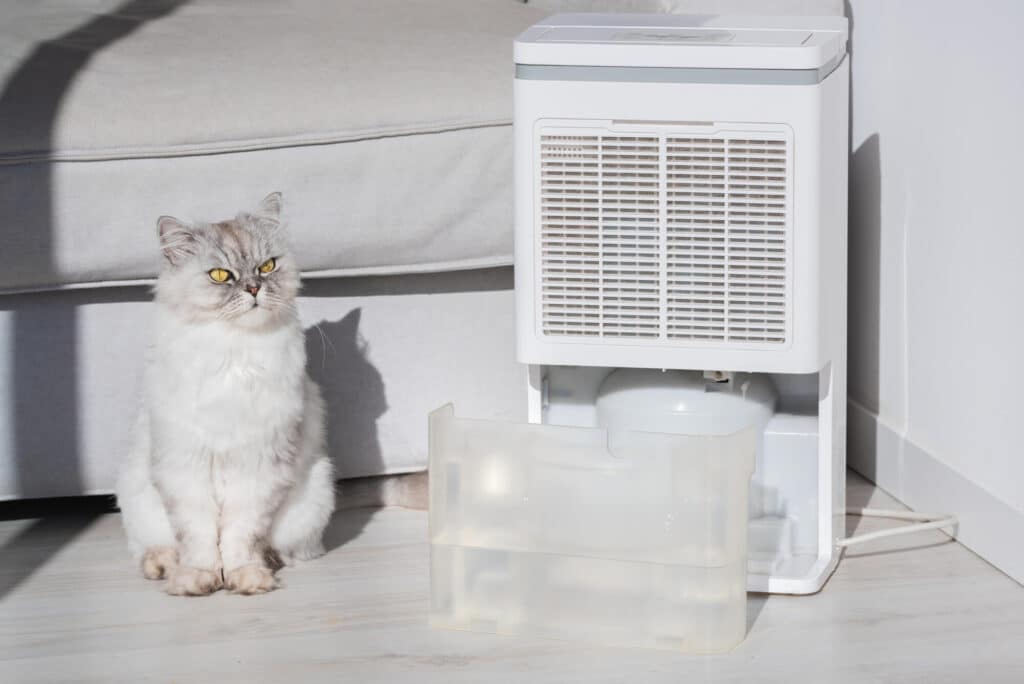
It depends on the cause, which is why measuring first matters. If the system is oversized, the realistic options are a variable speed system that can run longer at lower output, or a dedicated dehumidifier working alongside the existing unit. Neither is a small job, but both address the actual problem.
If the cause is duct leakage, sealing the ducts is usually the better value fix and it improves efficiency at the same time. If it is extraction venting into the attic, that is a straightforward correction with an immediate effect.
What rarely helps is simply turning the thermostat lower, or replacing a working unit with another one of the same size. Both are common responses and both tend to leave the house exactly as damp as it was.
Frequently Asked Questions
Why does my house feel humid even with the AC running?
Because cooling and dehumidifying are different jobs. The system only removes moisture while it runs with a cold coil, so short frequent cycles cool the air without drying it, leaving the house cold and clammy.
Can an air conditioner be too big?
Yes, and oversizing is a common cause of indoor humidity. A larger unit reaches the set temperature quickly and shuts off before it has removed much moisture, so the house cools fast and stays damp.
What humidity should a house be kept at?
Between forty and sixty percent relative humidity is the usual comfort range, with the lower half feeling better in warm weather. A cheap hygrometer will tell you which side of that you are on.
Will turning the thermostat down reduce humidity?
Usually not. A lower setting does not lengthen run times the way people expect, so you generally end up with a colder house that feels just as damp.
Does a dehumidifier work better than a bigger AC?
For a house that is already cooling adequately but feels damp, yes. Adding capacity tends to shorten run times further and make the humidity worse rather than better.
Find Out Which Problem You Actually Have
Damp and cold is a different fault from warm and damp, and the fixes barely overlap. Call us at 504-636-8724 and we will measure run times and indoor humidity rather than guessing from how the house feels. If you would rather set a time, send us the details through our contact page. If the system is also old enough to be near replacement, our guide to how long a system lasts here is worth a look, and our New Orleans repair team can advise either way.