New Orleans is a city built on character, and that character lives in the architecture. Shotgun houses, Creole cottages, Victorian doubles, historic mid-century apartments: these buildings define our neighborhoods and give New Orleans its unmistakable identity. But most of them were built long before central air conditioning existed, and retrofitting traditional ductwork into walls, ceilings, and floors built more than a century ago is expensive, invasive, and often impossible without compromising the structure or historic finishes. That is where ductless mini-split systems come in. At Big Easy AC & Heating, we install ductless mini-split systems throughout New Orleans and the surrounding metro area, bringing modern, energy-efficient cooling and heating to homes and buildings where traditional ductwork simply is not an option. Whether you have a shotgun house in Mid-City, a camelback in Treme, a sunroom addition in Lakeview, or a converted carriage house in the Garden District, a ductless mini-split gives you precise, powerful comfort without tearing into your walls or your budget.
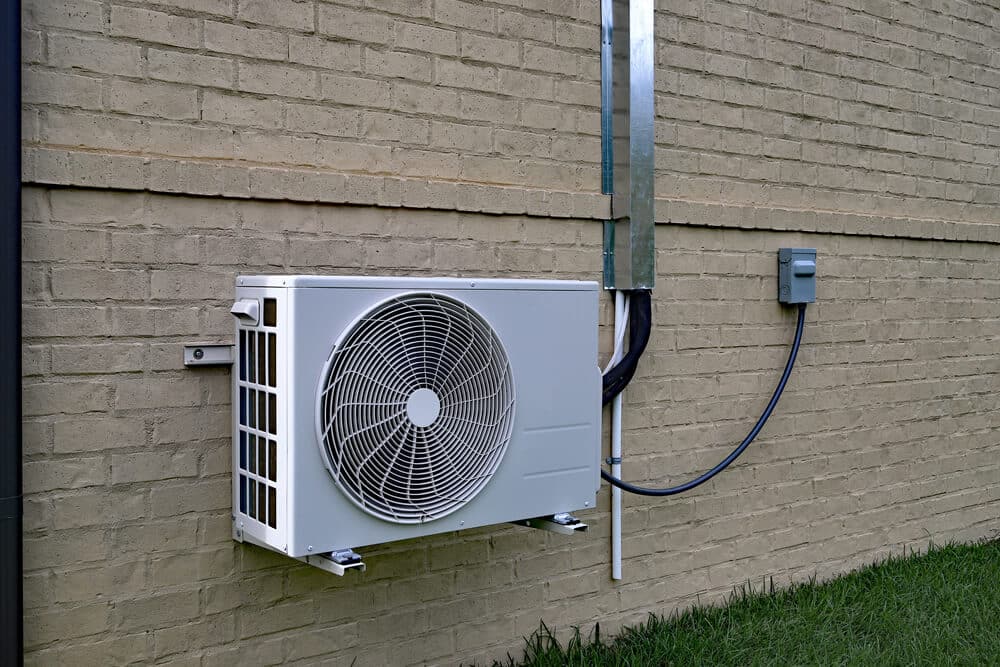
A ductless mini-split system is a type of HVAC equipment that delivers conditioned air directly into a room or zone without requiring any ductwork. The system has two main components: an outdoor compressor unit and one or more indoor air handlers. The two are connected by a refrigerant line set, electrical wiring, and a condensate drain line that runs through a small three-inch hole in the wall. That is the only penetration required.
The outdoor unit houses the compressor and condenser coil. The indoor air handler mounts high on an interior wall and delivers cool or warm air directly into the space it serves. There are no ducts, no air handlers in attics or crawlspaces, no distribution losses from leaky ductwork. The refrigerant loop transfers energy between indoors and outdoors, and the indoor unit circulates conditioned air through the room using its own fan and coil.
Ductless systems operate as heat pumps, which means they work for both cooling and heating. In cooling mode, the system extracts heat from inside your space and moves it outside, just like a central air conditioner. In heating mode, it reverses that process, pulling heat energy from the outdoor air and moving it inside. Modern ductless heat pumps operate efficiently down to approximately 25 degrees Fahrenheit, which is well below any temperature New Orleans experiences in a typical winter.
Systems come in two main configurations:
Learn more about the specific benefits of ductless systems compared to traditional central air on our detailed overview page.
New Orleans presents a unique set of challenges for HVAC. The climate demands serious cooling power for nine to ten months a year. Humidity is relentless. And the housing stock that gives our city its soul was built in an era before air conditioning existed. Ductless mini-splits were practically designed for New Orleans conditions.
The shotgun house is the most common residential form in New Orleans, and the Creole cottage is not far behind. Both are long and narrow with rooms arranged in a direct line, often sharing walls and featuring original plaster, heart pine floors, and ornate millwork. Running supply and return ducts through these structures requires major demolition: cutting through plaster ceilings, routing through walls, and finding space for air handlers in attics that were never meant to house mechanical equipment. A ductless mini-split eliminates all of that. The line set runs through a three-inch hole, the outdoor unit sits beside the house, and the indoor handler mounts on the wall. The installation footprint is minimal and the disruption to original finishes is essentially zero.
Many New Orleans homeowners add sunrooms, screened porches, garage conversions, or bonus rooms at the rear of the property. Extending the existing central AC system to serve a new addition requires re-engineering the duct system, resizing the air handler, and often replacing the outdoor unit to handle the added load. A ductless single-zone system handles the addition independently, keeps the existing system intact, and costs a fraction of a full system upgrade. New Orleans summers are not kind to spaces without dedicated cooling, and a ductless unit solves the problem quickly.
New Orleans has strict historic preservation requirements. Homes in HDLC-governed historic districts face significant restrictions on exterior alterations, and some interior modifications require approval as well. A traditional forced-air system often demands exterior penetrations for exhaust, large rooftop equipment, or visible ductwork chases that compromise historic character. A ductless mini-split system requires only a small three-inch hole through the wall for the line set, which is easily patched and concealed. The outdoor condenser can be placed discreetly beside or behind the structure. Many New Orleans historic building owners choose ductless specifically because it allows modern comfort with minimal visual impact.
New Orleans has thousands of doubles, triplexes, and small apartment buildings where tenants need independent control over their own comfort. A shared central system creates billing complications and puts comfort decisions in one person’s hands. Ductless systems can be installed unit by unit, giving each tenant their own system, their own thermostat, and their own utility responsibility. This also makes ductless a practical upgrade path for property owners: you do not have to tackle every unit at once.
New Orleans averages approximately 2,900 cooling degree days per year. The air conditioning season runs from roughly March through November. In that context, system efficiency is not a minor consideration. It directly drives what you pay every month for the better part of a year.
Central air conditioners installed today typically carry SEER2 ratings between 14 and 21. Ductless mini-split systems regularly achieve SEER2 ratings between 20 and 38. At the high end, a premium ductless system is nearly three times more efficient than the minimum-code central system. In a New Orleans climate where your unit runs almost constantly for the better part of nine to ten months, that difference compounds into significant monthly savings. Add the fact that ductless systems eliminate duct losses (studies estimate that 20 to 30 percent of conditioned air is lost through duct leaks in a typical forced-air system), and the efficiency advantage becomes even more pronounced.
At Big Easy AC & Heating, we install equipment from the top ductless mini-split manufacturers in the industry. Brand selection matters because it affects long-term reliability, parts availability, warranty coverage, and performance in the specific heat and humidity conditions of New Orleans.
Mitsubishi Electric is widely considered the benchmark for residential ductless systems. The M-Series line covers single-zone and multi-zone residential applications with SEER2 ratings as high as 33.1. The P-Series is designed for light commercial applications: multi-family buildings, retail spaces, offices, and historic commercial structures throughout New Orleans. Mitsubishi systems are known for their quiet operation, precise inverter-driven compressor technology, and industry-leading warranty coverage. Their i-see Sensor technology detects occupancy and adjusts airflow automatically, improving comfort and reducing energy waste.
Daikin is one of the world’s largest HVAC manufacturers and produces ductless systems with exceptional efficiency and broad application coverage. The Daikin Ultra series offers some of the highest SEER2 ratings available in residential ductless equipment. The Aurora series is specifically engineered for cold climate performance, though its advanced compressor technology also delivers outstanding efficiency in hot, humid climates like New Orleans. Daikin’s inverter-driven systems modulate compressor speed continuously rather than cycling on and off, which means more stable temperatures and lower energy consumption.
LG’s ductless line includes the Art Cool and Standard series, covering a wide range of residential and light commercial applications. LG is known for innovative indoor unit designs, including flush-panel and cassette-style handlers that integrate cleanly into finished spaces. This makes LG a strong choice for New Orleans properties where aesthetics matter alongside performance. LG’s ThinQ technology enables WiFi-connected smart control through a mobile app, giving homeowners remote access to their systems from anywhere.
Carrier’s Infinity ductless line brings the reliability and brand recognition of one of North America’s most established HVAC manufacturers to the ductless category. Carrier Infinity systems offer high SEER2 ratings, Greenspeed intelligence for variable-speed compressor operation, and compatibility with Carrier’s Infinity system controls. For New Orleans homeowners who want name-brand reliability and easy service support, Carrier Infinity is a strong option.
Our team will help you evaluate which brand and model fits your specific application, budget, and efficiency goals. We carry current-generation equipment from all four manufacturers and service what we sell.
One of the most important decisions in a ductless installation is whether you need a single-zone or multi-zone system. The right answer depends on the size of your space, how many rooms need independent conditioning, and your budget.
A single-zone system consists of one outdoor compressor unit connected to one indoor air handler. It serves one room or one open area. Single-zone systems are the right choice for:
Single-zone systems are simpler, less expensive per zone, and easier to service. They are also the most efficient configuration because the compressor is sized precisely to the load it serves. For a New Orleans room addition or a small camelback, a single-zone system is almost always the right call.
A multi-zone system uses one outdoor compressor unit to serve two to five indoor air handlers, each installed in a different room or area. Each indoor handler has its own independent controls, so different occupants can set different temperatures in different rooms simultaneously. Multi-zone systems are the right choice for:
Multi-zone systems save money on outdoor equipment (one compressor instead of several), but they also require more careful load calculation and system design to ensure each zone receives adequate capacity. Our technicians perform Manual J load calculations for every multi-zone installation to make sure the system is properly sized.
As a general guide for New Orleans installations:
These ranges reflect equipment, labor, refrigerant, electrical work, and permitting. Actual costs vary based on system brand, SEER2 rating, installation complexity, and access conditions specific to your New Orleans property.
A professional ductless installation follows a consistent process that protects your property, ensures correct system performance, and meets Louisiana mechanical code requirements. Here is what to expect when you work with Big Easy AC & Heating.
We visit your property before any equipment is ordered. Our technicians assess the space dimensions, insulation levels, window area, orientation, occupancy, and any specific conditions unique to your New Orleans home or building. We perform a Manual J load calculation to determine the correct system capacity. Oversized systems short-cycle and leave humidity problems behind. Undersized systems run continuously and never reach target temperatures. Proper sizing from the start is non-negotiable.
Based on the load calculation and your goals, we recommend the appropriate brand, series, capacity, and configuration. We explain your options clearly, including efficiency tiers, available rebates, warranty terms, and any factors specific to your New Orleans property, such as placement restrictions on historic structures.
The outdoor condenser needs a stable, level surface with adequate clearance for airflow and service access. We select placement that minimizes visual impact, protects the unit from flooding risk (a real consideration in New Orleans), and meets manufacturer clearance requirements. Units are mounted on pads or wall brackets depending on the site conditions.
The indoor air handler mounts high on an interior wall using a manufacturer-provided mounting bracket. Placement is chosen to maximize air distribution across the space. Our technicians handle all framing, leveling, and bracket installation.
We drill a three-inch penetration through the wall to route the refrigerant line set, electrical conduit, and condensate drain line between the indoor and outdoor units. Line sets are secured, insulated, and protected with line set cover where exposed. All wall penetrations are sealed and weatherproofed.
Ductless systems require a dedicated electrical circuit. Our licensed electricians install the disconnect box, run the appropriate wiring between indoor and outdoor units, and ensure all connections meet Louisiana electrical code.
We connect the refrigerant lines, pull a vacuum on the system to remove air and moisture, verify system pressure, and release the factory refrigerant charge. We then commission the system: verify all operating parameters, test heating and cooling modes, check airflow at the indoor handler, and confirm remote control and smart thermostat connectivity where applicable.
Before we leave, we walk you through system operation, filter maintenance, and troubleshooting basics. We provide all documentation including warranty registration, permit paperwork, and our service contact information. Most single-zone installations in New Orleans are complete in one day. Multi-zone installations typically take one to two days depending on the number of zones.
Ductless mini-split costs in New Orleans depend on several factors: the number of zones, the brand and efficiency tier you choose, installation complexity, electrical work required, and any permits needed for your specific parish.
Entergy Louisiana and Entergy New Orleans customers may qualify for rebates on qualifying high-efficiency ductless mini-split systems. Entergy has offered rebates of up to $500 on ENERGY STAR certified ductless heat pumps. The Energy Smart New Orleans program administers rebate programs specifically for Orleans Parish customers. Rebate availability and amounts change periodically, so we recommend confirming current offers when you are ready to move forward. Our team can help you identify which systems qualify and how to file for your rebate.
Big Easy AC & Heating serves the full New Orleans metro area for ductless mini-split installation, replacement, and service. Our service territory includes:
If your property is in the Greater New Orleans area and you are not sure whether we serve your location, call us at 504-636-8724 and we will confirm right away.
A properly installed and maintained ductless mini-split system typically lasts 15 to 20 years in New Orleans conditions. The longevity of any HVAC system in the Gulf South climate depends significantly on maintenance. New Orleans air is salt-laden, humid, and corrosive. Outdoor coils should be cleaned annually, and indoor filters should be cleaned every four to six weeks during heavy use. Skipping annual professional maintenance accelerates coil corrosion and compressor wear. Systems from top-tier manufacturers like Mitsubishi Electric and Daikin are engineered with corrosion-resistant coatings specifically for coastal and humid climates, which helps extend service life in conditions like New Orleans. A well-maintained system from a quality brand is a long-term investment, not a short-term fix.
Yes, and in most cases it is the single most practical solution available. Shotgun houses in New Orleans present a genuine engineering challenge for central air conditioning. The linear layout, original plaster ceilings, narrow floor plan, and historic construction details make ductwork installation expensive, invasive, and potentially damaging to the historic character of the building. A ductless mini-split can be installed in a New Orleans shotgun house with minimal disruption: one three-inch hole per zone, a wall-mounted indoor handler, and an outdoor unit placed beside the structure. You preserve the original finishes, avoid major demolition, and get precise room-by-room control. For a three-room shotgun, a three-zone multi-split handles the whole house from a single outdoor unit. The payback period, when you factor in efficiency savings versus window units, is typically three to five years.
Yes. Modern ductless mini-splits operate as heat pumps, which means they provide both cooling and heating from the same system. In heating mode, the system extracts heat energy from outdoor air and moves it inside, which is significantly more efficient than resistance electric heat. New Orleans rarely sees temperatures below 30 degrees Fahrenheit, and modern ductless heat pumps operate efficiently down to approximately 25 degrees. For practical purposes, a quality ductless system will handle every heating demand New Orleans typically produces. You get year-round comfort from one system, one remote, and one set of controls without the need for separate heating equipment. This is especially valuable in New Orleans where mild winters do not justify the expense of a gas furnace for most homeowners.
Electricity consumption depends on system size, SEER2 rating, how often the system runs, and the temperatures inside and outside your home. As a benchmark, a 12,000 BTU (one-ton) ductless system with a SEER2 rating of 22 running eight hours per day might consume approximately 4 to 5 kWh daily. In a New Orleans summer, that translates to roughly $15 to $20 per month for one zone at current Entergy rates, though actual usage varies with outdoor temperatures and thermostat settings. Compare that to a window unit of similar capacity, which typically carries a SEER rating of 10 to 12, and the ductless system uses 40 to 50 percent less electricity for the same cooling output. Over a 10-month New Orleans cooling season, that difference adds up to meaningful savings on your Entergy bill every year.
Yes, in most cases. Ductless mini-split installations in New Orleans and surrounding parishes typically require a mechanical permit, and the electrical work requires an electrical permit as well. Orleans Parish, Jefferson Parish, and St. Tammany Parish all have permit requirements for HVAC installations. Properties in historic districts may also require a Certificate of Appropriateness from the HDLC for any exterior work, including placement of the outdoor condenser unit. Big Easy AC & Heating handles permit applications as part of the installation process. We know the local requirements, work with parish building departments regularly, and ensure your installation is fully code-compliant. Unpermitted HVAC work creates problems at sale time and may void manufacturer warranties.
Yes, and this is one of the most important performance characteristics for New Orleans homeowners. New Orleans averages over 74 percent relative humidity year-round, and summer months routinely exceed 80 percent. Ductless mini-splits remove moisture from the air as part of the cooling process, just like central air conditioning. Inverter-driven ductless systems have an additional advantage: because they modulate compressor speed rather than cycling on and off, they run at lower speeds for longer periods during mild conditions. Longer runtimes mean more time removing humidity, which translates to lower indoor relative humidity and better comfort even when the outdoor temperature is not at its peak. Many New Orleans homeowners notice improved indoor air quality and comfort during the spring and fall shoulder seasons specifically because of this characteristic.
Sizing a ductless mini-split requires a load calculation based on room dimensions, ceiling height, insulation, window area and orientation, and how the space is used. General guidelines suggest approximately 12,000 BTU per 500 to 600 square feet in a typical New Orleans room, but New Orleans conditions push that number higher. Older homes with poor insulation, high ceilings, single-pane windows, or sun-exposed walls need more capacity per square foot than newer, well-insulated construction. West-facing rooms in New Orleans take a severe afternoon sun load during summer, and sunrooms or additions with large glass areas can require 150 to 200 percent of the capacity a standard formula would suggest. We perform Manual J calculations for every installation rather than relying on rules of thumb, because an improperly sized system in New Orleans either struggles to keep up or short-cycles and leaves humidity behind.
Significantly quieter. Window air conditioners typically operate at 50 to 60 decibels at normal settings, which is roughly equivalent to a normal conversation. Premium ductless mini-split indoor handlers operate at 19 to 32 decibels at low speed, which is closer to a whisper or the sound of rustling leaves. This difference is dramatic in practice: the rumble and rattle of a window unit is replaced by a nearly inaudible airflow. The outdoor condenser unit typically operates at 45 to 55 decibels, roughly equivalent to a quiet neighborhood street, and it sits outside rather than in your window. For New Orleans homeowners in older homes who have relied on window units, the switch to ductless is often described as transformative in terms of indoor quiet. This matters especially in bedrooms and home offices where window unit noise has been a persistent irritation.
Yes, and this is one of the most common applications in New Orleans. Many homeowners have a functioning central AC system that handles most of the house well but has one or two problem areas: a rear addition, a converted attic space, a sunroom, or a room with poor duct balance that never cools evenly. Rather than replacing the entire central system or re-engineering the ductwork, adding a single-zone ductless unit to the problem area solves the issue directly and cost-effectively. The ductless system handles the specific zone where the central system falls short, the central system continues serving the rest of the house, and both systems can be sized and operated at their efficient best. This hybrid approach is practical, affordable, and avoids major disruption to a working system.
In New Orleans conditions, annual professional maintenance is the minimum, and twice-yearly service is better for systems running year-round. Indoor air handler filters should be cleaned every four to six weeks during peak season. New Orleans air carries high humidity, pollen, dust, and in coastal and older neighborhoods, elevated particulate from older infrastructure. Dirty filters reduce airflow, force the system to work harder, and allow contaminants to bypass the filter and coat the indoor coil. A coated indoor coil loses efficiency and can develop mold. Annual professional service includes coil cleaning, refrigerant level verification, electrical connection inspection, condensate drain clearing, and a full performance check. Condensate drain maintenance is especially important in New Orleans because the high humidity means your system produces significant condensate, and a blocked drain will back up into the indoor handler and drip into your walls or ceiling.
A ductless mini-split is a type of heat pump. The term heat pump describes the operating principle: the system moves heat energy from one place to another rather than generating it by burning fuel. All ductless mini-splits sold for residential use in New Orleans are heat pumps, meaning they both cool and heat. A central air conditioner paired with a separate gas furnace is not a heat pump. A central air conditioner paired with an air handler and heat strips is a heat pump in cooling mode but uses inefficient resistance heat in heating mode. A ductless mini-split uses heat pump operation for both cooling and heating, which is why it delivers three to four units of heating energy for every unit of electrical energy it consumes during mild New Orleans winters. The efficiency advantage in heating mode is substantial and makes a ductless system far more economical than resistance electric heat for New Orleans winter comfort.
Yes. Under the Inflation Reduction Act, qualifying ductless mini-split heat pumps may be eligible for the Energy Efficient Home Improvement Credit (25C), which provides a tax credit of up to 30 percent of the cost of the equipment and installation, capped at $2,000 per year for heat pumps. Systems must meet efficiency requirements to qualify: currently, that means a minimum SEER2 of 16 and EER2 of 12 for split systems in the South climate region. Most of the premium ductless systems we install exceed these thresholds significantly. This credit applies to primary residences, not rental properties, and the full rules are subject to IRS guidance. We recommend consulting a tax advisor to confirm eligibility for your specific situation. Combined with Entergy rebates, federal tax credits can significantly offset the installed cost of a high-efficiency ductless system in New Orleans.
If your New Orleans home has no ductwork, a room that never cools properly, or a historic building where traditional duct installation is not realistic, a ductless mini-split system from Big Easy AC & Heating is the answer. We bring licensed installation expertise, top-brand equipment, and working knowledge of New Orleans’ unique building stock to every job. Our team has installed ductless systems across shotgun houses in the Seventh Ward, Creole cottages in Treme, camelbacks in Broadmoor, room additions in Gentilly, and commercial spaces in the CBD and Warehouse District.
We offer free in-home assessments for New Orleans area ductless installations. Our technicians will evaluate your space, perform a load calculation, and give you a clear written estimate with no pressure and no surprises. Most installations are complete in one day, and we handle all permits. Ready to get started? Contact Big Easy AC & Heating online or call us directly at 504-636-8724. Comfortable, efficient, ductless climate control in New Orleans starts with one conversation.