About banner

Indoor Air Quality

Indoor Air Quality Services in New Orleans, LA | Big Easy AC & Heating

New Orleans presents some of the most demanding indoor air quality challenges anywhere in the country. Extreme outdoor humidity, a long history of flooding, intense spring pollen, and post-storm building materials combine to create indoor air that can trigger allergies, worsen asthma, and promote mold growth throughout the year. At Big Easy AC & Heating, we provide whole-home indoor air quality solutions designed specifically for the New Orleans climate, including dehumidifiers, UV-C germicidal lights, advanced air filtration, energy recovery ventilators, and professional duct cleaning.

Indoor Air Quality Challenges in New Orleans

New Orleans homeowners deal with a unique combination of IAQ problems that require targeted solutions rather than off-the-shelf products.

Extreme Humidity

New Orleans outdoor relative humidity averages 85 percent or higher for most of the year. That outdoor moisture constantly infiltrates homes through walls, windows, and air infiltration points. Even a properly functioning air conditioner cannot always dehumidify adequately, particularly during fall and spring when outdoor temperatures are mild and the AC does not run long enough to remove excess moisture. When indoor relative humidity exceeds 60 percent, mold growth accelerates, dust mites thrive, and musty odors develop throughout the home.

Mold and Post-Storm Contamination

Hurricane Katrina, subsequent flooding events, and tropical storms have left mold contamination embedded in the walls, crawlspaces, and attics of many New Orleans homes. Even after professional remediation, mold spores can persist in HVAC ductwork and recirculate every time the system operates. Black mold (Stachybotrys chartarum) is particularly concerning after prolonged water intrusion. Post-storm renovation materials, including certain drywall products, insulation, and adhesives, also off-gas volatile organic compounds (VOCs) for months or years after installation.

Pollen and Allergens

New Orleans is home to one of the highest oak pollen concentrations in the country. Live oak trees shed pollen from February through April, coating cars, streets, and rooftops in yellow-green powder that infiltrates homes through any available opening. Combined with mold spores, dust mites (which thrive in humid conditions), and pet dander, the allergen load in New Orleans homes is among the highest in the region. Standard HVAC filters capture only a fraction of these particles.

Legionella and Standing Water Risk

New Orleans’ flat geography and frequent heavy rainfall create standing water conditions that support Legionella bacteria growth. AC condensate drain lines that are not properly maintained can harbor biological contamination. Proper HVAC maintenance, including condensate drain cleaning and UV-C germicidal treatment, reduces this risk for New Orleans homeowners.

Indoor Air Quality Solutions We Install

Big Easy AC & Heating offers the full range of whole-home IAQ products and services appropriate for New Orleans conditions. We assess your home, identify the primary issues, and recommend targeted solutions rather than selling products you do not need.

Whole-Home Air Purifiers

Whole-home air purification systems integrate directly into your existing HVAC equipment and treat all the air circulating through your home. Options include electronic air cleaners, media air cleaners with MERV 11 to 16 filters, polarized media filters, and ionization-based purifiers. Unlike portable room purifiers, whole-home systems work continuously and cover every room connected to your duct system. They are particularly effective at capturing mold spores, pollen, fine dust, and other particulates that standard 1-inch filters miss.

UV-C Germicidal Lights

UV-C germicidal lights are one of the most effective IAQ solutions for New Orleans homes specifically because of our mold problem. Installed near the evaporator coil inside your air handler, a UV-C lamp continuously irradiates the coil surface and the air passing through the system. At the 254-nanometer wavelength, UV-C light destroys the DNA of mold, bacteria, and viruses, preventing them from reproducing. New Orleans evaporator coils frequently develop mold colonies due to the constant moisture present during normal cooling operation. UV-C treatment eliminates this contamination at the source.

Whole-Home Dehumidifiers

A whole-home dehumidifier connects to your HVAC system and operates independently of your air conditioner to maintain indoor humidity at the target range of 30 to 50 percent. This is the single most impactful IAQ upgrade for most New Orleans homes. Systems from brands like Aprilaire, Santa Fe, and Honeywell are sized to handle the moisture load of entire homes, removing up to 90 or more pints of water per day from the indoor environment. They include automatic humidity controls and integrate with smart thermostats for precise humidity management year-round.

Energy Recovery Ventilators (ERV)

Energy recovery ventilators bring fresh outdoor air into the home while exhausting stale indoor air, exchanging heat and moisture between the two airstreams so your HVAC system does not bear the full load of conditioning outside air. ERVs comply with ASHRAE Standard 62.1 ventilation requirements and are especially valuable in well-sealed modern homes where indoor CO2, VOCs, and other pollutants can accumulate. In New Orleans, an ERV with humidity recovery helps manage the outdoor moisture load while maintaining the air freshness that closed, heavily air-conditioned homes often lack.

Professional Duct Cleaning

HVAC ductwork in older New Orleans homes can harbor decades of accumulated dust, debris, mold spores, and biological material. When the system runs, this contamination circulates through every room. Professional duct cleaning using NADCA-recommended methods removes built-up contaminants from supply and return ducts, air handlers, and coils. After flooding or major water intrusion events, duct cleaning and disinfection are often necessary before the HVAC system can deliver clean air. We recommend combining duct cleaning with UV-C installation to prevent future biological buildup.

Whole-Home Dehumidification in New Orleans

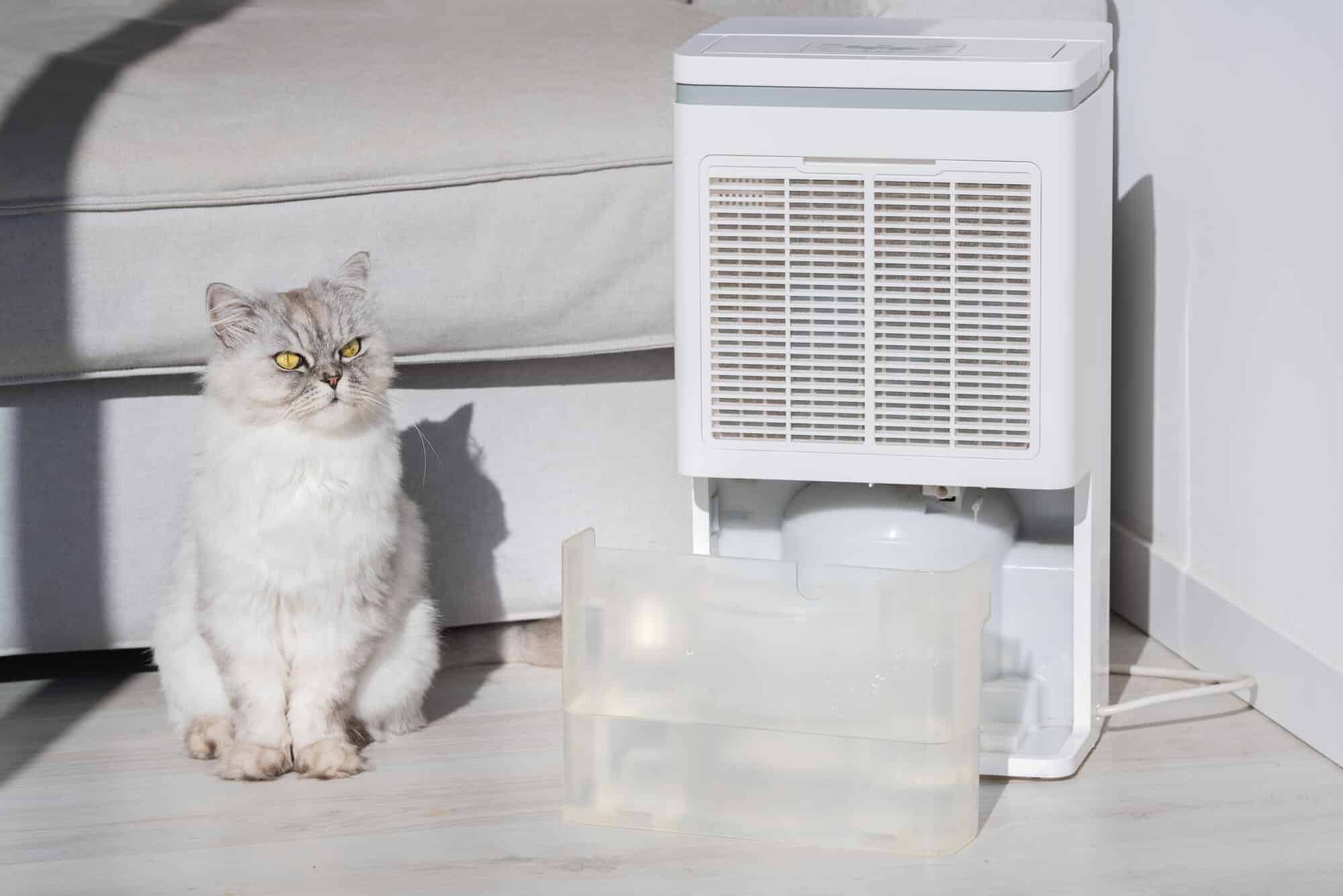
Portable dehumidifiers can reduce humidity in a single room, but they cannot address the whole-house humidity problem that most New Orleans homes face. A portable unit running in one bedroom does nothing for the living room, kitchen, or crawlspace. It also requires manual emptying of the water reservoir unless directly drained, which adds inconvenience. And portable units consume significant electricity while covering only a fraction of the home’s floor area.

A whole-home dehumidifier solves all of these problems. It integrates with your HVAC system, connects to a permanent drain line, and operates automatically based on indoor humidity sensors. The system runs whenever indoor humidity exceeds your set point, regardless of whether the air conditioner is operating. This is particularly important during New Orleans’ mild seasons when the AC may not run at all, yet outdoor humidity continues to drive indoor moisture levels above the mold threshold.

Properly sized whole-home dehumidifiers for New Orleans typically have a rated capacity of 70 to 130 pints per day, depending on home size, construction type, and the degree of air infiltration. Our team performs a moisture load assessment to recommend the correct unit rather than guessing at capacity. Oversizing leads to excessive runtime costs; undersizing fails to control humidity adequately.

UV-C Germicidal Lights for New Orleans Homes

UV-C germicidal lights address one of New Orleans’ most persistent indoor air quality problems: mold growth on HVAC evaporator coils and inside ductwork. Every time your air conditioner runs, the evaporator coil cools the air passing over it. As warm, humid New Orleans air contacts the cold coil, moisture condenses on the coil surface. This moisture creates a perfect environment for mold and bacterial growth.

Once established on the coil, mold releases spores into the airstream every time the system operates. Those spores travel through ductwork and emerge from supply registers throughout the home. Occupants breathe contaminated air without knowing the source. Standard air filters do not stop mold growing inside the air handler itself.

UV-C germicidal lamps installed in the air handler resolve this at the source. A coil-mounted UV-C lamp irradiates the evaporator coil surface 24 hours a day, keeping it biologically clean. An in-duct UV-C lamp in the return or supply plenum treats the airstream in real time, destroying mold spores, bacteria, and viruses before they reach living spaces. Most UV-C lamps require lamp replacement once per year, which we include in our maintenance programs.

Air Filtration Upgrades for New Orleans Homes

Standard 1-inch fiberglass filters protect HVAC equipment from large debris but do little to improve indoor air quality. They typically achieve MERV 4 to 6 ratings, which means they miss the majority of particles that affect human health, including mold spores, fine pollen, and bacteria.

Upgrading to a higher-MERV filter is one of the most cost-effective IAQ improvements available. Here is how MERV ratings apply to New Orleans IAQ concerns:

  • MERV 8: Captures large particles including dust, pollen, and pet dander. A meaningful upgrade over standard filters for most homes.
  • MERV 11: Adds capture of fine dust, mold spores, and some bacteria. Recommended for New Orleans homes with allergy sufferers or mold history.
  • MERV 13: Captures fine particles including most bacteria, tobacco smoke particles, and fine mold spores. Near-hospital grade for residential use. Ideal for New Orleans homes with occupants who have asthma or compromised immune systems.
  • MERV 16 and above: Medical-grade filtration. Not compatible with all residential HVAC systems without modifications. Ask our team if your equipment can accommodate high-MERV filters without restricting airflow.

An important note: higher-MERV filters create more airflow resistance and must be matched to your HVAC system’s blower capacity. Improper filter installation can reduce airflow, freeze the evaporator coil, and cause premature compressor failure. We assess your system before recommending a filter upgrade and can install a media cabinet that accommodates thicker, higher-MERV filters without airflow penalty.

Indoor Air Quality and Your HVAC System

Your HVAC system is the central mechanism for distributing air throughout your home, which makes it the most powerful tool for improving indoor air quality, and also the most significant source of air contamination when neglected. In New Orleans, where the system runs nearly year-round, the relationship between HVAC maintenance and indoor air quality is especially direct.

Dirty evaporator coils reduce efficiency and create mold habitat. Clogged drain pans back up condensate and create standing water that supports bacterial growth. Deteriorating duct insulation sheds particles into the airstream. Leaky ducts in unconditioned attic spaces can draw in attic air containing insulation fibers, mold spores, and rodent debris. Every one of these problems directly affects the air your family breathes.

The IAQ improvements we install work in concert with a well-maintained HVAC system. UV-C lights keep the coil clean between service visits. High-MERV filters capture what the lights miss. Dehumidifiers remove the moisture that drives mold and dust mite populations. ERVs bring in fresh air so contaminants do not concentrate in sealed spaces. Together, these systems address the full spectrum of indoor air quality challenges that New Orleans homeowners face.

Proper filter maintenance remains foundational. In New Orleans, we recommend changing standard filters every 30 to 45 days during peak allergy and humidity seasons, and every 60 days during winter. Higher-MERV media filters in cabinet housings typically last three to six months. Our maintenance program includes filter checks at every visit.

Frequently Asked Questions About Indoor Air Quality in New Orleans

Why is indoor air quality so bad in New Orleans?

New Orleans presents some of the most challenging indoor air quality conditions in the country. The city’s outdoor relative humidity regularly exceeds 85 percent, which drives indoor humidity and creates ideal conditions for mold and mildew growth inside homes. Oak and other tree pollen is intense in spring. Post-hurricane flooding has left mold spores embedded in walls and crawlspaces throughout the metro area, and post-storm renovation materials in many homes continue to off-gas volatile organic compounds (VOCs). The combination of high humidity, biological contaminants, and airborne allergens makes professional IAQ solutions especially important in New Orleans.

What are signs of poor indoor air quality in my home?

Common signs of poor indoor air quality include musty odors, visible mold or mildew on walls or ceilings, condensation on windows and walls, worsening allergy or asthma symptoms indoors, frequent respiratory irritation like coughing or sneezing, and a stuffy or stale feeling even when windows are closed. In New Orleans homes, a musty smell after the AC runs is often a sign of mold growth on the evaporator coil or inside the ductwork. Elevated indoor humidity is the most common root cause in our climate.

What is the best air purifier for New Orleans?

For New Orleans homes, the most effective air purification combines a high-efficiency air filter (MERV 11 to 13 or higher) with a UV-C germicidal light installed in the HVAC system. The filter captures particulates like pollen, dust, and mold spores, while the UV-C light destroys biological contaminants on the evaporator coil and in the airstream before they circulate through the home. Whole-home systems integrated into your HVAC are far more effective than portable room purifiers because they treat all the air passing through your system rather than a single room.

Do I need a whole-home dehumidifier in New Orleans?

In most New Orleans homes, a whole-home dehumidifier is strongly recommended. New Orleans outdoor humidity averages 85 percent or higher for most of the year, and even a well-functioning air conditioner cannot always dehumidify adequately, particularly during mild weather when the AC does not run long enough to remove moisture. Indoor relative humidity above 60 percent accelerates mold growth, attracts dust mites, and creates musty odors. A whole-home dehumidifier works alongside your HVAC system to maintain indoor humidity between 30 and 50 percent regardless of outdoor conditions.

Can my HVAC system spread mold through the house?

Yes, this is a real and common problem in New Orleans homes. Mold growth on the evaporator coil or inside ductwork allows spores to circulate every time the system runs, spreading biological contamination throughout the living space. Signs include musty air coming from vents, visible mold near supply registers, and worsening respiratory symptoms indoors. UV-C germicidal lights installed near the evaporator coil kill mold on the coil surface and in the airstream. Duct cleaning removes accumulated debris where mold colonies can establish. Together, these treatments can significantly improve air quality in affected homes.

What does a MERV rating mean on an air filter?

MERV stands for Minimum Efficiency Reporting Value and rates how effectively an air filter captures airborne particles. The scale runs from 1 to 20. MERV 8 filters are standard in most residential systems and capture larger particles like dust, pollen, and pet dander. MERV 11 to 13 filters capture smaller particles including mold spores, fine dust, and some bacteria, and are recommended for New Orleans homes where mold and allergen exposure is elevated. MERV 16 and above are medical-grade filters. Not all HVAC systems can handle high-MERV filters without airflow restriction, so consult with our team before upgrading.

How do UV-C lights work in an HVAC system?

UV-C germicidal lights are installed inside your HVAC system, typically near the evaporator coil or in the air handler. UV-C light at the 254-nanometer wavelength disrupts the DNA and RNA of mold, bacteria, and viruses, preventing them from reproducing. The light continuously irradiates the coil surface, preventing mold colonization, and treats air passing through the system. This is particularly effective in New Orleans because the evaporator coil is a prime location for mold growth due to the moisture it collects during normal cooling operation. UV-C systems require minimal maintenance beyond annual lamp replacement.

How often should I have my ducts cleaned in New Orleans?

NADCA recommends professional duct cleaning every three to five years for most homes, but New Orleans conditions often warrant more frequent cleaning. Homes that experienced flooding, storm damage, or mold remediation should have ducts inspected and cleaned as part of the remediation process. Older homes with flex duct or insulated metal ducts accumulate debris more quickly in humid environments. Signs that cleaning is overdue include visible dust near supply registers, musty odors when the system runs, and unexplained increases in allergy symptoms indoors.

What is a whole-home energy recovery ventilator?

An energy recovery ventilator (ERV) brings fresh outdoor air into your home while removing stale indoor air, exchanging heat and moisture between the two airstreams so your HVAC system does not have to work as hard to condition the incoming air. In New Orleans, where outdoor humidity is high, an ERV helps manage moisture while maintaining adequate ventilation per ASHRAE Standard 62.1. ERVs are particularly valuable in tightly sealed, well-insulated homes where natural air infiltration is low and indoor CO2 and VOC levels can build up. They improve air freshness without the humidity spike associated with simply opening windows.

Concerned about indoor air quality in your New Orleans home? Call 504-636-8724 or visit our contact page to schedule an indoor air quality assessment. Our technicians serve all of New Orleans, Metairie, Kenner, Slidell, the Northshore, and surrounding communities.

Free Estimates