

What Do New Orleans Homeowners Need to Know About AC Installation?
- Licensed & Insured
- 24/7 Emergency Service
- Free Estimates
AC installation in New Orleans involves selecting the right system type, sizing it correctly for your home, and having a licensed HVAC contractor handle refrigerant charging, electrical connections, and ductwork. Given the city’s extreme heat and humidity, the system you choose and how it gets installed directly affect your comfort, energy bills, and equipment lifespan.
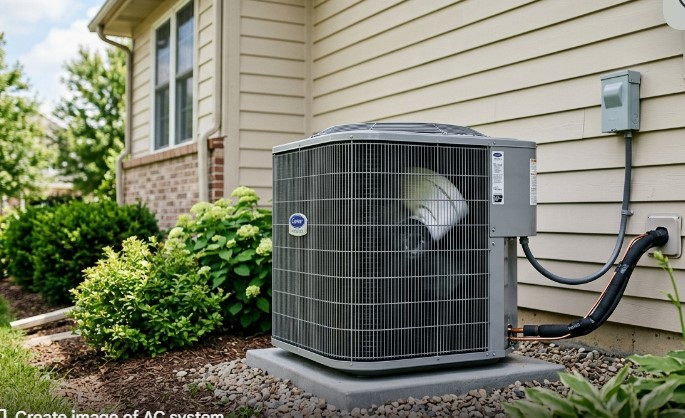
New Orleans summers are no joke. The city routinely sees heat index values above 100°F from June through September, with average relative humidity hovering around 75 to 80 percent throughout the summer months. A poorly installed or undersized AC unit will not keep up, and an oversized one will short-cycle, leaving your home feeling damp and clammy.
Big Easy Air Conditioning serves homeowners across the Greater New Orleans area and understands exactly what the local climate demands from a cooling system. Getting a free estimate before you commit to any equipment is a smart first step.
What Type of AC System Works Best in New Orleans?
Most New Orleans homes perform best with a high-efficiency split-system central air conditioner or a ductless mini-split, depending on whether existing ductwork is present. Both options handle humid subtropical conditions well when properly sized.
Here is a quick comparison of the most common system types:
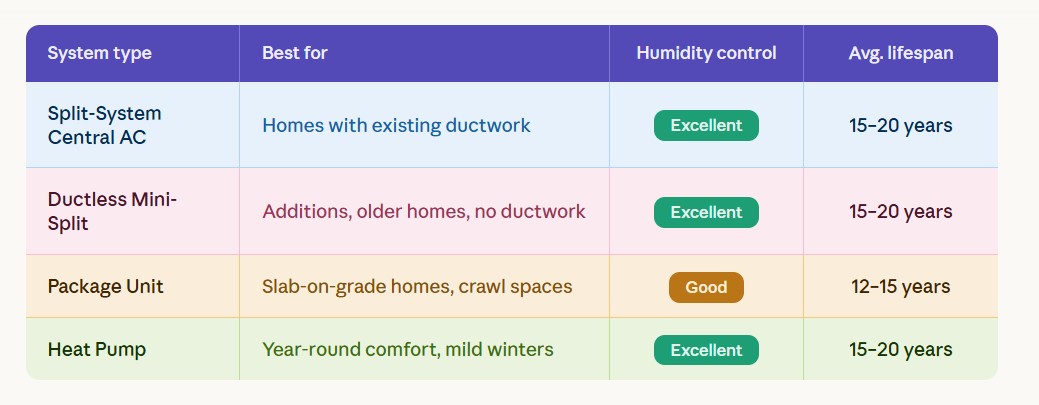
Heat pumps are particularly cost-effective in Louisiana because winters are mild enough that the heating mode operates efficiently for most of the season. For homes without ducts, a ductless mini-split system avoids the expense and energy losses that come with installing new ductwork in older structures.
How Do You Choose the Right AC Size for Your New Orleans Home?
AC sizing is calculated using Manual J, the industry-standard load calculation developed by the Air Conditioning Contractors of America (ACCA). It accounts for square footage, ceiling height, insulation quality, window area, local climate data, and more. Never let a contractor size your system based on square footage alone.
An oversized system cools too quickly without running long enough to remove moisture from the air. In New Orleans, that means a home that feels cold but still humid. An undersized system runs nonstop and still cannot reach your set temperature on the hottest afternoons.
A proper Manual J calculation will produce a cooling load in BTUs (British Thermal Units) per hour. Most residential systems range from 18,000 to 60,000 BTU, or 1.5 to 5 tons. One ton of cooling equals 12,000 BTU per hour.
Read more about sizing decisions in How to Choose the Right Size AC Unit for Your Space.
What Happens During a Professional AC Installation?
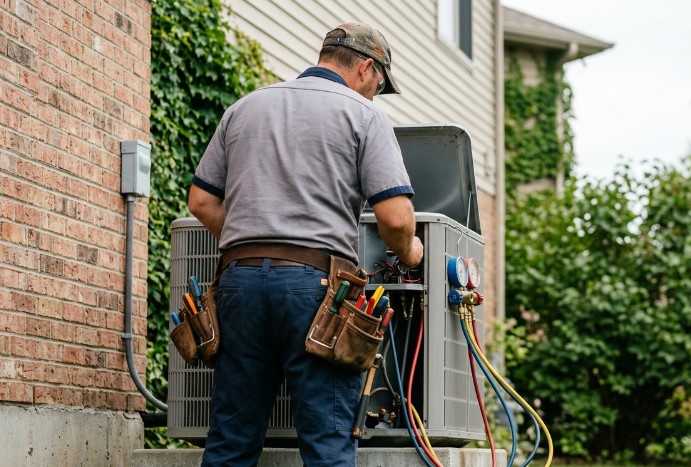
A licensed HVAC contractor installs your AC system through a structured process: site evaluation, equipment delivery, old system removal (if applicable), refrigerant line installation, electrical connections, ductwork inspection or modification, system startup, and testing. The full process typically takes four to eight hours for a standard replacement.
Here is what to expect step by step:
- Pre-installation assessment — The technician inspects ductwork, electrical panel capacity, and existing refrigerant lines.
- Old unit removal — The old system is safely decommissioned and refrigerant is recovered per EPA Section 608 regulations.
- New equipment placement — The indoor air handler and outdoor condenser are positioned and secured.
- Refrigerant line connections — Copper lineset connections are made and pressure-tested for leaks.
- Electrical hookup — Dedicated circuit wiring is connected and breaker sizing is verified.
- System startup and commissioning — Refrigerant charge is verified, airflow is measured, and thermostat operation is confirmed.
- Homeowner walkthrough — The technician explains how to operate and maintain the new system.
Louisiana HVAC contractors are required to hold a valid license from the Louisiana State Licensing Board for Contractors. Always verify licensure and insurance before any work begins.
How Much Does AC Installation Cost in New Orleans?
AC installation costs in New Orleans typically range from $3,500 to $8,500 for a standard central air system, depending on system size, SEER2 rating, brand, and whether ductwork modifications are needed. Ductless mini-split installations for a single zone range from $2,000 to $5,000.
Key cost factors include:
- System size: Larger systems cost more in both equipment and labor.
- SEER2 rating: Higher-efficiency units carry a higher upfront cost but lower operating costs.
- Ductwork condition: Leaky or improperly sized ducts increase labor costs.
- Refrigerant type: Systems using newer refrigerants like R-454B may have different pricing than older R-410A equipment.
- Permits: New installations in Orleans Parish require a permit from the Department of Safety and Permits.
Zoning systems add cost but can deliver meaningful long-term savings. Learn more about the advantages of zoning your AC system before committing to a single-zone setup.
How Do You Keep a New AC System Running at Peak Performance?
Schedule a professional tune-up at least once per year, ideally in early spring before peak cooling season. Change air filters every one to three months. Keep the outdoor condenser clear of vegetation and debris. In New Orleans, salt air and humidity accelerate corrosion, so annual coil cleaning is especially important.
A new system is only as good as the maintenance that follows installation. Review AC maintenance tips to keep your unit running smoothly to build a maintenance routine that extends your equipment’s lifespan.
Frequently Asked Questions
How long does AC installation take in New Orleans?
A standard replacement installation takes four to eight hours. New construction installs requiring ductwork may take one to two days depending on home size and system complexity.
Do I need a permit for AC installation in New Orleans?
Yes. Most residential AC installations in Orleans Parish and surrounding parishes require a permit from the local permitting authority. A licensed HVAC contractor typically handles permit applications on your behalf.
What refrigerant do new AC systems use in 2025?
Most new residential systems use R-410A or transitional refrigerants like R-454B and R-32. The EPA has been phasing out R-410A under AIM Act regulations, and manufacturers have been introducing lower-GWP refrigerant alternatives.
Is a heat pump a good choice in New Orleans?
Yes. Because New Orleans winters rarely drop below freezing for extended periods, an air-source heat pump delivers highly efficient heating without the need for a gas furnace. Many homeowners find heat pumps reduce total HVAC operating costs year-round.
How often should I replace my AC unit in New Orleans?
Most central air conditioners last 15 to 20 years with proper maintenance. In New Orleans, high humidity and long cooling seasons can accelerate wear, so systems older than 15 years should be evaluated annually for replacement potential.
What size AC unit does a 2,000 square foot New Orleans home need?
A rough estimate suggests a 3 to 4-ton system for a 2,000 square foot home in New Orleans, but the correct size depends on a full Manual J load calculation. Ceiling height, insulation, window area, and home orientation all affect the answer.
Can I install a window unit instead of central AC?
Window units work for supplemental cooling but struggle to control humidity the way central systems do. In New Orleans’ climate, whole-home humidity control is a significant comfort factor that window units cannot match at scale.
Get Expert AC Installation Help in New Orleans
AC installation is one of the biggest home comfort investments you will make. Getting the system type, size, efficiency rating, and installation quality right from the start determines how comfortable and cost-efficient your home stays for the next 15 to 20 years.
Big Easy Air Conditioning is New Orleans’ trusted licensed and insured HVAC contractor with 10-plus years of experience helping homeowners choose and install the right cooling systems.
Contact Big Easy Air Conditioning today for a free installation estimate.