

Evaporative Cooler vs. AC: Which Is Better for Louisiana?
A traditional central air conditioner is far better suited for Louisiana than an evaporative cooler. Louisiana’s average relative humidity regularly exceeds 70%, and evaporative coolers require dry air to work. They add moisture to the air to create cooling, which fails entirely in already-humid conditions. For Gulf Coast homeowners, a refrigerant-based AC system is the only reliable option.
How Do the Two Systems Actually Differ?
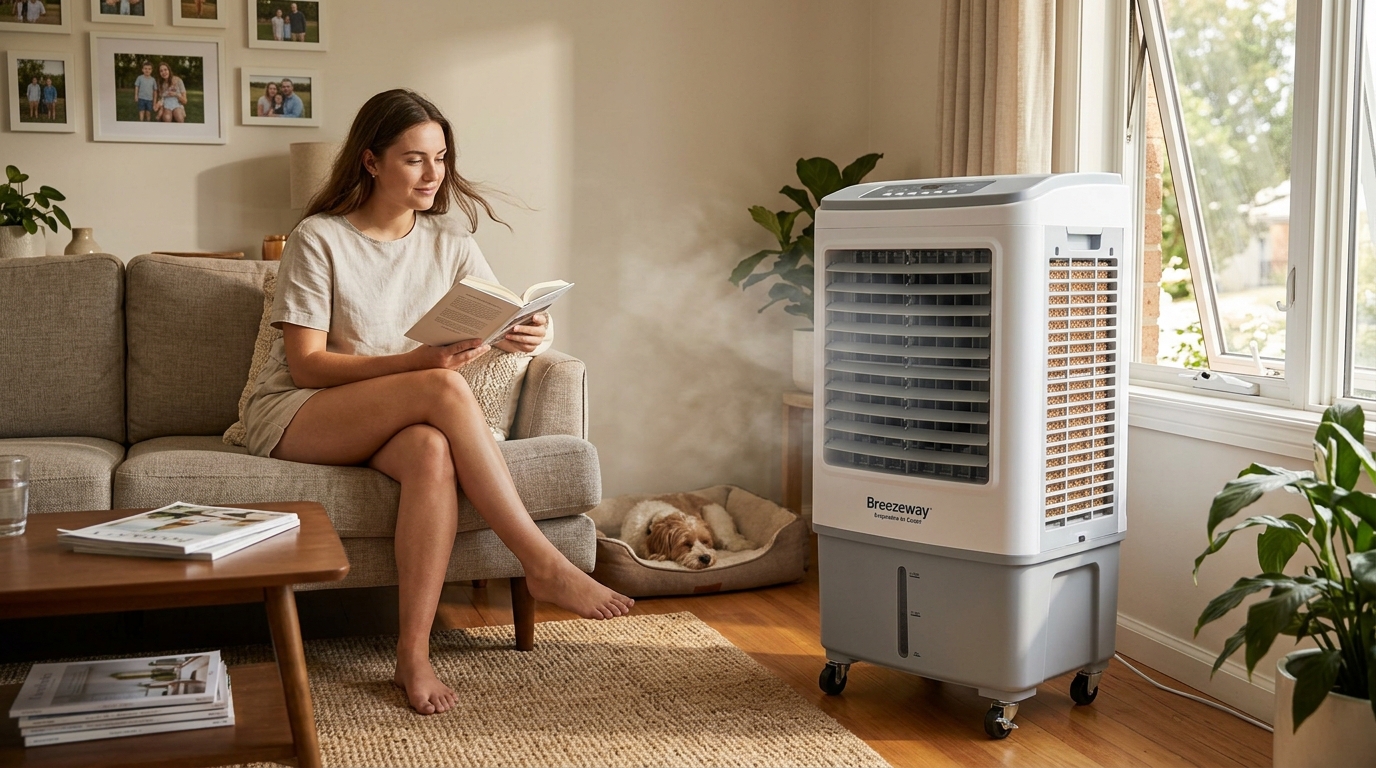
Evaporative coolers, also called swamp coolers, draw warm outside air through water-saturated pads. The water evaporates, dropping the air temperature before it enters the home. They work exceptionally well in hot, dry climates like the American Southwest, where outdoor humidity stays below 30%.
Central air conditioners use a refrigerant cycle to physically remove heat and moisture from indoor air, then expel it outside. The system cools and dehumidifies simultaneously, making it the correct technology for humid subtropical climates like Louisiana’s.
The core difference: evaporative coolers add humidity while cooling. Air conditioners remove humidity while cooling. In Louisiana, adding more moisture to already-saturated air creates discomfort and potential mold risk, not relief.
Why Do Evaporative Coolers Fail in Louisiana’s Climate?
Evaporative cooling efficiency drops sharply as outdoor humidity rises. According to the U.S. Department of Energy, evaporative coolers lose most of their effectiveness when relative humidity exceeds 50%. New Orleans and surrounding Louisiana parishes average humidity between 70% and 90% during summer months, based on NOLA climate data.
At those humidity levels, the evaporation process slows to the point where temperature drops become negligible, often less than 3 to 5 degrees Fahrenheit. That is insufficient to provide meaningful comfort when outdoor temperatures reach 95 degrees or higher, which is common from June through September in Louisiana.
Beyond comfort, excess moisture from a swamp cooler in a humid environment accelerates mold growth, wood rot, and indoor air quality problems.
How Do the Costs Compare?
| Factor | Evaporative Cooler | Central AC |
|---|---|---|
| Unit cost | $300 to $2,000 | $3,500 to $7,500+ |
| Installation | $500 to $1,500 | $1,500 to $5,000 |
| Monthly energy use | 60 to 75% less than AC | Standard baseline |
| Humidity control | Adds humidity | Removes humidity |
| Effectiveness in Louisiana | Very low | High |
| Lifespan | 10 to 15 years | 15 to 20 years |
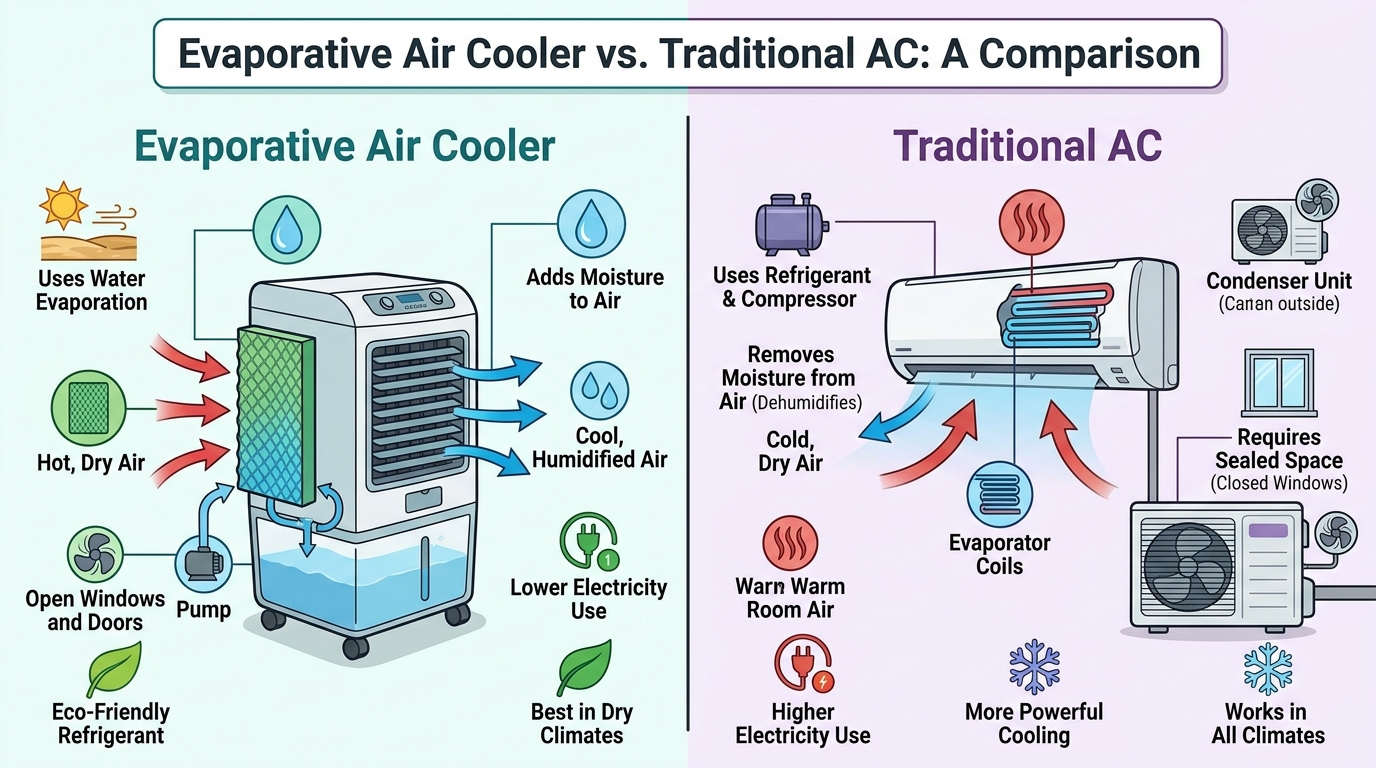
Evaporative coolers carry lower upfront and operating costs. However, cost savings mean nothing if the unit cannot cool the space. In Louisiana, running a swamp cooler means paying for a system that provides minimal relief while increasing indoor humidity to uncomfortable and potentially damaging levels.
Are There Any Situations Where an Evaporative Cooler Works in Louisiana?
In very limited applications such as an open-air warehouse, a covered outdoor patio, or a garage workshop with strong cross-ventilation, an evaporative cooler can provide slight temperature relief. These are spaces where added humidity either disperses outside or does not matter.
For any enclosed living space in Louisiana, an evaporative cooler is not a practical substitute for air conditioning. Even portable evaporative coolers marketed for indoor use will struggle and may make the indoor environment feel more oppressive during Louisiana summers.
Explore Big Easy Air Conditioning’s evaporative cooler services to learn more about where this technology fits and when a refrigerant-based system is the right call instead.
What Is the Best Cooling System for Louisiana Homes?
For most Louisiana homeowners, the choice comes down to central AC versus a ductless mini-split system, both of which use refrigerant cycles and actively dehumidify. Central AC suits homes with existing ductwork, while ductless systems work well for additions, older homes without ducts, or zoned cooling needs.
Heat pumps are also worth considering. A high-efficiency heat pump can handle both heating and cooling in Louisiana’s mild winters while delivering strong summer performance. Systems with a SEER2 rating of 16 or higher are recommended for Louisiana’s climate zone, per the Air Conditioning Contractors of America (ACCA) Manual J guidelines.
For personalized guidance on the right system for your home, contact Big Easy Air Conditioning for a free estimate.
Frequently Asked Questions
Can I use an evaporative cooler as a supplement to AC in Louisiana?
Using both simultaneously is counterproductive. AC works by removing humidity. Adding an evaporative cooler reintroduces moisture, forcing the AC to work harder and raising energy bills.
What SEER rating should I look for in Louisiana?
A minimum SEER2 rating of 15 to 16 is recommended for Louisiana. Higher ratings deliver better efficiency during the long, intense cooling season.
Is a heat pump better than a traditional AC in Louisiana?
For most Louisiana homes, yes. Heat pumps provide both heating and cooling, and modern variable-speed models handle high humidity effectively while reducing energy costs year-round.
How much does central AC cost to run per month in Louisiana?
The average Louisiana household spends $150 to $250 per month on cooling during peak summer months, depending on home size, insulation quality, and system efficiency, according to the U.S. Energy Information Administration (EIA).
Does Louisiana's humidity shorten AC lifespan?
Yes. The constant workload from high humidity causes more wear on compressors and coils. Regular maintenance every 6 to 12 months helps offset this and extends system life.