

How Does Central Air Conditioning Work?
Central air conditioning in New Orleans works by removing heat and moisture from indoor air using a refrigerant cycle, then distributing the cooled, dehumidified air throughout the home via a network of ducts. The system does not generate cold air. It transfers heat from inside the home to the outside, leaving the indoor air cooler as a result. This process repeats continuously until the thermostat’s set temperature is reached.
What Are the Key Components of a Central AC System?
A central air conditioning system consists of two main sections: an outdoor unit and an indoor unit, connected by refrigerant lines and electrical wiring.
Outdoor unit:
- Compressor: Pressurizes the refrigerant, raising its temperature so it can release heat outside.
- Condenser coil: Releases the heat absorbed from inside the home into the outdoor air.
- Condenser fan: Blows air across the condenser coil to accelerate heat dissipation.
Indoor unit:
- Evaporator coil: Absorbs heat from indoor air as refrigerant evaporates inside the coil.
- Air handler and blower fan: Pulls warm indoor air across the evaporator coil and pushes cooled air into the duct system.
- Air filter: Removes dust and particulates before air passes over the evaporator coil.
Connecting systems:
- Refrigerant lines: Carry refrigerant between the indoor and outdoor units in a closed loop.
- Ductwork: Distributes cooled air to every room via supply vents and returns warm air to the air handler via return vents.
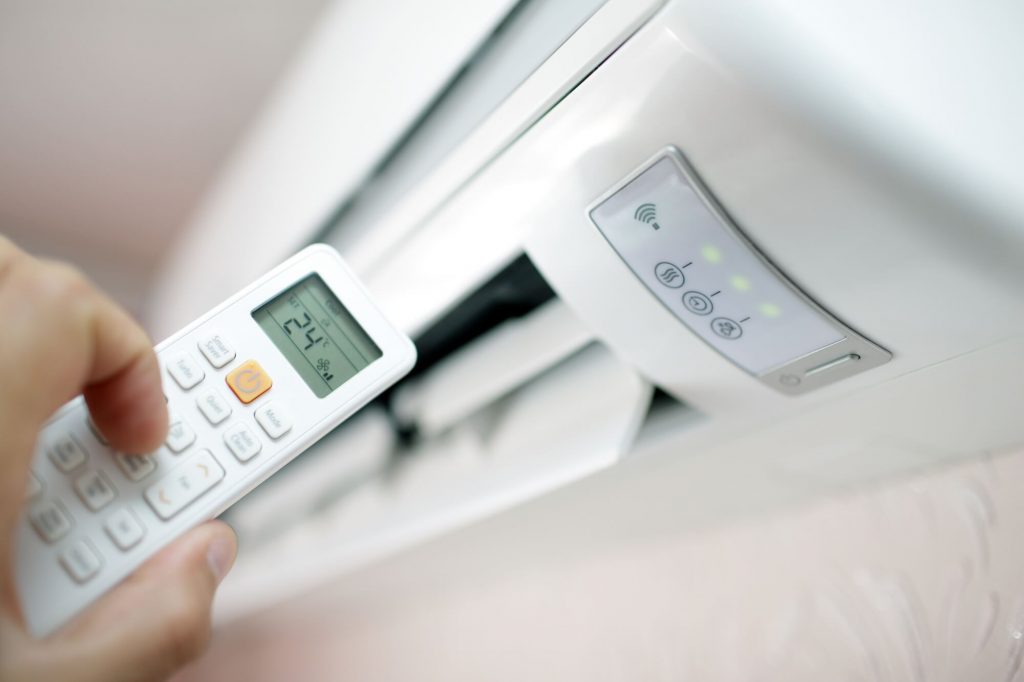
- Thermostat: Monitors indoor temperature and signals the system to run or stop.
How Does the Refrigerant Cycle Work Step by Step?
- Warm air is drawn in. The air handler’s blower pulls warm, humid indoor air through return vents and across the air filter.
- Heat is absorbed at the evaporator coil. Refrigerant inside the evaporator coil is in a cold, low-pressure liquid state. Warm air passes over the coil; the refrigerant absorbs the heat and evaporates into a gas. The air leaving the coil is now cooler and drier.
- Cooled air is distributed. The blower pushes the cooled air through supply ducts to every room in the home.
- Refrigerant travels to the compressor. The warm refrigerant gas moves to the outdoor compressor unit, where it is compressed into a hot, high-pressure gas.
- Heat is released outside. The hot refrigerant flows through the condenser coil, where the condenser fan blows outdoor air across it, releasing the heat outside.
- Refrigerant returns to liquid state. After releasing its heat, the refrigerant passes through an expansion valve, dropping in pressure and temperature back to its cold liquid state, ready to absorb heat again.
- Cycle repeats. The process continues until the thermostat reads the target temperature and shuts the system off.
How Does Central AC Remove Humidity?
Dehumidification is a natural byproduct of the cooling process. When warm, humid air passes over the cold evaporator coil, moisture in the air condenses on the coil surface, the same way condensation forms on a cold glass. This condensate drains into a drain pan and exits through a condensate drain line.
In New Orleans, where outdoor humidity regularly exceeds 70%, this dehumidification function is as important as temperature reduction. A properly sized and maintained central AC system keeps indoor relative humidity between 40% and 60%, the range recommended by the American Society of Heating, Refrigerating and Air-Conditioning Engineers (ASHRAE) for comfort and air quality.
What Makes Central AC the Right Choice for New Orleans?
Central AC suits New Orleans homes well for several reasons. It actively dehumidifies, addressing Louisiana’s primary comfort challenge alongside heat. It provides whole-home cooling from a single system with centralized controls. It works independently of outdoor humidity levels, unlike evaporative coolers. Modern high-efficiency central AC systems with SEER2 ratings of 16 to 20 reduce energy costs significantly compared to older units.
For homes with existing ductwork, central AC typically delivers the lowest cost per square foot cooled of any available system type.
For more details about central AC options suited to New Orleans’ climate, read the complete guide to central air conditioning in New Orleans, or contact Big Easy Air Conditioning for a free system assessment.
Frequently Asked Questions
How long does it take for central AC to cool a house?
A properly sized system cools most homes by 1 degree Fahrenheit every 15 to 20 minutes under normal conditions. Extreme heat or an undersized unit may require 30 to 45 minutes or more to reach the set temperature.
Why does my central AC run constantly without reaching temperature?
Constant running without hitting the set point suggests an undersized system, refrigerant leak, dirty coils, or duct leakage. A licensed technician can identify the specific cause with a system evaluation.
How often should I change my central AC filter in New Orleans?
Every 30 to 60 days. New Orleans’ humidity and airborne particulates load filters faster than in drier climates. A clogged filter reduces airflow and system efficiency significantly.
What is the ideal thermostat setting for New Orleans summers?
The U.S. Department of Energy recommends 78 degrees Fahrenheit when home and 85 degrees when away. Setting the thermostat lower than needed does not cool the home faster. It only runs the system longer.
Can central AC also heat a home in Louisiana?
A standard central AC unit cools only. Pairing it with a gas furnace or upgrading to a heat pump system provides both heating and cooling from the same duct network.