

Why Does My AC Smell Like Burning? What New Orleans Homeowners Should Do First
Last Updated: September 2026
What This Guide Covers
- Should You Stay in the House or Leave?
- Why Does a Burning Smell Happen the First Cold Week?
- What Does an Electrical Burning Smell Mean?
- Can a Bad AC Compressor Cause a Burning Smell?
- What Does a Refrigerant Leak Actually Smell Like?
- Why Does This Happen So Often in New Orleans?
- When Should You Call a Technician?
- Frequently Asked Questions
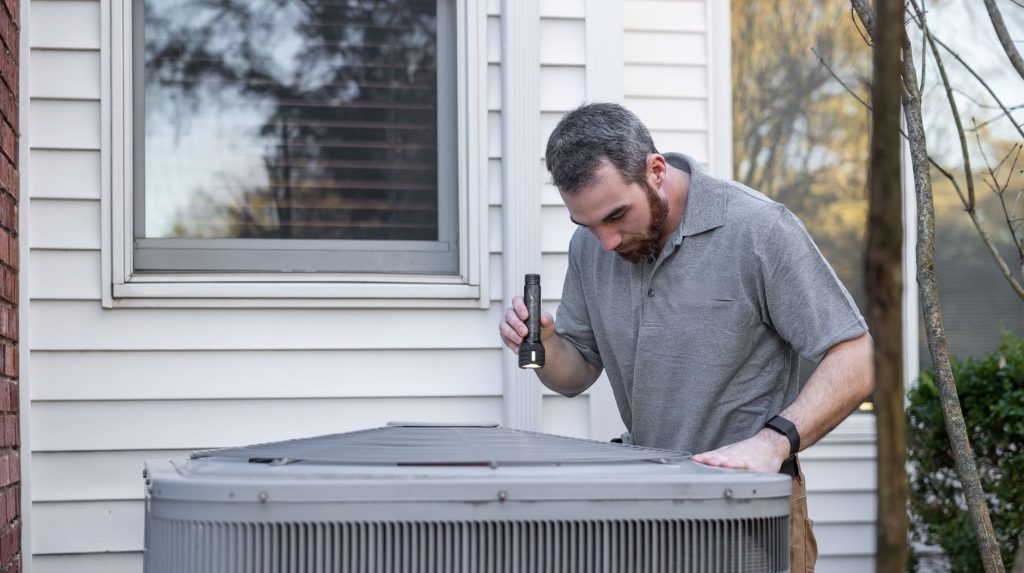 Most air conditioning faults can wait until morning. A burning smell is not one of them. Some causes are harmless and clear on their own. Others mean something is overheating inside your attic or your walls right now, and the two can smell similar in the first minute. This guide from Big Easy Air Conditioning sets out how to tell them apart and, just as importantly, what to do when you cannot.
If you already know the system needs attention, our New Orleans AC repair team can talk you through shutting it down safely over the phone.
Should You Stay in the House or Leave?
Leave and call 911 if you see smoke, if the smell is sharp like hot plastic, or if you cannot confidently account for it. Smoke does not have to be visible for an electrical fault to be serious. If the smell is faint and dusty, switch off at the breaker, open windows, and keep checking.
Two questions narrow it down. Is the smell dusty or is it acrid? And is it fading or holding steady? A dusty smell that weakens is usually harmless. A sharp chemical or plastic smell is not, and it should be treated as a possible electrical fault until a technician says otherwise.
The test is not perfect, and that is worth saying plainly. Plenty of people meet an electrical smell for the first time and read it as dust. If you cannot tell which one you have, or it does not fade, treat it as the serious case and leave.
Switching off at the breaker rather than only at the thermostat matters. A thermostat carries a low voltage signal telling the system to stop. It does not de-energise the equipment, and a stuck contactor can keep drawing current after the thermostat goes dark. One exception: never approach a panel or an outdoor disconnect through smoke, sparking, or a smell getting rapidly worse. Leave and let the fire service make it safe.
Why Does a Burning Smell Happen the First Cold Week?
Dust settles on the heat exchanger or heat strips across a long cooling season. The first time the system makes heat, that dust burns off and gives a slightly scorched smell that usually clears within about an hour, though it varies. It is the most common cause of a burning smell and needs no repair.
Around here it arrives later than it does elsewhere and catches people off guard, because the heat side of a New Orleans system can sit untouched from March until a cold front finally arrives in December.
What marks it out is the timing. It fades rather than holding steady, and it turns up the first time heat runs after a long gap. A burning smell during normal cooling in September is not dust burning off, and it needs a different explanation.
What Does an Electrical Burning Smell Mean?
An acrid, chemical, or hot plastic smell usually means wire insulation is melting, a capacitor is failing, or a blower motor is overheating. This kind of fault does not clear on its own. Switch the system off at the breaker and book a technician rather than running it again to test it.
The usual culprits are the run capacitor, the blower motor, the contactor in the outdoor unit, and the wiring at any connection that has worked loose. These often fail gradually and generate heat on the way, which is why the smell tends to arrive before any loss of cooling does. Plenty of homeowners notice it while the system is still blowing cold air perfectly well. Some fail suddenly instead, so a smell that appears without warning is not reassuring.
Can a Bad AC Compressor Cause a Burning Smell?
Yes. A compressor drawing too much current, struggling to start, or running with a failed capacitor will overheat, and that heat can produce a burning smell at the outdoor unit. It usually comes with a hum, a click that repeats every few seconds, or a unit that starts and then stops again within seconds.
There is a quick way to locate it. Stand next to the outdoor condenser. If the smell is strongest out there and faint indoors, the compressor is the likely source. If it is strongest at the supply vents, the problem sits with the air handler instead.
Compressors are also where repair costs jump. A failed capacitor is inexpensive. A failed compressor on an older system prompts a wider conversation, covered in our guide to how long an AC unit lasts in this climate.
What Does a Refrigerant Leak Actually Smell Like?
Not like burning. Modern residential refrigerant is close to odourless, and the faintly sweet smell people describe usually comes from compressor oil rather than the gas. Smell is not a reliable leak test either way. A real leak shows up as weak cooling, ice on the refrigerant lines, or a hissing sound.
Burning smells point toward electrical and mechanical faults. Musty smells point toward moisture and microbial growth, a separate issue covered in our notes on improving indoor air quality through your AC.
If your system is blowing warm rather than cold alongside the smell, the diagnosis runs differently, and our guide to an AC blowing warm air in New Orleans covers that sequence in more detail.
Why Does This Happen So Often in New Orleans?
Local conditions raise the odds. Air handlers here often sit in attics that get very hot in summer, which can expose motors and wiring insulation to more thermal stress than the same equipment would see in conditioned space. A cooling season running most of the year also means many more start and stop cycles.
Start and stop cycles are what loosen electrical connections, rather than run hours on their own. Each cycle heats a terminal and lets it cool again, and a connection that works loose develops resistance. Resistance generates heat, and heat is what you end up smelling.
Where moisture and salt air reach those connections, corrosion adds to it. None of this makes a burning smell normal, but it is a call we take often. Several related faults appear in our roundup of common AC problems and their fixes.
When Should You Call a Technician?
Call if the smell is sharp, chemical, or like hot plastic, if it lasts more than an hour, or if it arrives with tripped breakers, a humming outdoor unit, or reduced airflow. A faint dusty smell that fades on the first heating cycle of the season does not need a visit.
Tell whoever you call three things: what the smell is like, where it is strongest, and whether the system was heating or cooling when it started. Those answers narrow the fault a long way before anyone opens a panel, and they usually shorten the visit.
If the system is old enough that this is one of several faults in a single season, it is worth reading when replacement makes more sense than another repair before authorising the work.
Frequently Asked Questions
Is it safe to stay in a house with a burning smell?
Only if the smell is clearly faint and dusty, fading, and the system is off at the breaker. If it is sharp, chemical, like hot plastic, getting worse, or you simply cannot tell, leave and call 911. Visible smoke is not required for the situation to be serious.
Why does the air smell burnt when I first turn the heat on?
Dust that settled during the cooling season burns off the heat exchanger or heat strips. It usually clears within about an hour. If it holds steady or returns on later cycles, it is not dust.
Can a bad AC compressor cause a burning smell?
Yes. A compressor drawing excess current or running with a failed capacitor overheats and can produce a burning smell, usually strongest at the outdoor unit and often with a hum or repeated clicking.
What does a freon leak smell like?
Modern refrigerant is close to odourless, so smell is not a reliable way to find a leak. Look instead for weak cooling, ice on the refrigerant lines, or hissing. A burning smell points somewhere else entirely.
Should I run the system again to see if the smell comes back?
Not if the smell was sharp or chemical. An overheating electrical connection gets worse with every cycle, so repeated testing adds risk without adding much information.
Get It Looked At Before It Gets Worse
If your system is off at the breaker and you are waiting on someone, you are already doing the right thing. Call us at 504-636-8724 and we will tell you whether it needs someone tonight or whether it can wait until morning. If it is less urgent and you would rather pick a time, send us the details through our contact page and we will come back to you.